
 Physical Quantity in Physics

Click on the menu on the left to change the font of the text to your liking.
Click on the day and night icon to darken the background of the text.
📚 Physical Quantity in Physics
(in simple terms)

2- 🎯 Take the Practice Quiz( Test your understanding )
What You'll Learn
📖 1 - What is Physical Quantity
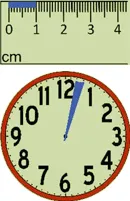
Physics is the science of measurement and comparison. Therefore, physics studies things that can be measured. Anything measurable is called a physical quantity. Examples include the length of a rod, the speed of a car, and the mass of a stone. all of these represent physical quantities.
However, if something cannot be measured, it is not a physical quantity and physics does not study it. Examples include: beauty, Violence, kindness. For instance, we cannot say that the beauty of a painting is 20 units, or that a person is angry to the extent of 10 units. In fact, we cannot assign a number to such attributes.
Therefore, for anything to be measurable, we must be able to assign a numerical value to it. Consequently, since physics is the science of measurement, the values obtained from these measurements and the logical relationships between them lead to the discovery of physical laws. In this way, we gain a better understanding of the universe.
✏️ example 1:

Which of the following expressions represent physical quantities?
- Length of a rod
- beauty of a painting
- speed of a car
- Violence of a person
- mass of a stone
- great kindness.
✅ answer:
Anything that is a quantity is measurable.- The length of a rod is a quantity and can be measured with a ruler to obtain a number.
- the beauty of a painting is not a quantity because we cannot assign a number to it.
- the speed of a car is a quantity because the car's speedometer assigns a number to it
- the violence of a person is not a quantity
- the mass of a stone can be measured with a scale, so it is a quantity
- great kindness is not a quantity - even though we say "great," we cannot assign a number to it.
📖 2 - Types of Physical Quantities

Quantities are divided into two categories: scalar or vector. Also, wherever you see the word "scalar," know that it refers to the same as "scalar quantity" (non-directional).
Scalar Quantity: Something that only has magnitude but no direction, and they are added together using ordinary algebraic methods. For example, mass is a scalar because it has no direction. We do not say the mass of a watermelon is 5 kilograms in the north direction - that sentence is meaningless. Quantities such as mass, time, length, energy, heat, etc., are scalars.
Vector Quantity: Something that has both magnitude and direction, and they are added together using vector methods. For example, consider velocity. If we say a car is moving at 80 km/h from south to north, our statement makes sense. Examples include force, displacement, velocity, and acceleration. These are vectors because they have direction and are added using vector methods.
Now let's compare these two types of quantities to clarify these concepts further.
📖 3 - Identifying Vector or Scalar Nature

If we have a quantity, how can we determine whether it is vector or scalar? Perhaps the simplest way is to ask ourselves: "In which direction?" If the question makes sense, the quantity can be a vector. In fact, if we can point to its direction with our hand, this quantity can be a vector.
For example, consider mass. Suppose an object has a mass of 2 kilograms. If we ask, "In which direction is the mass 2 kilograms?" the question is meaningless. But if an object is displaced by 2 meters, asking "In which direction was it displaced?" makes sense.
📖 4 - Common mistakes
The following items can be confusing (especially for beginners):
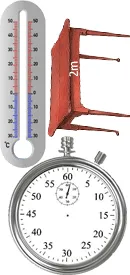
- Length vs. Displacement: The length of a table is 2 meters. This is a scalar quantity because it doesn't matter which direction the table is facing. The table is 2 meters long regardless of orientation. This quantity can be confused with displacement. When we say an object was displaced by 2 meters, the direction of the displacement is also crucial, making it a vector.
- Temperature is not a vector: Temperature rises or falls, so it has an upward or downward direction. This is a misconception. The object is simply getting hotter or colder; nothing physical is moving up or down. The mercury level in a thermometer may rise, but the mercury itself is not the temperature it merely indicates the temperature.
- Time is not a vector: Time moves forward, so it has a direction. This is also incorrect; it is merely a figure of speech. You cannot point your finger to a physical direction for time.
📖 5 - Methods of adding quantities
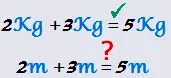
You might wonder what the use of scalar and vector quantities is and why we need to learn them. One reason is the addition of quantities. For example, we know that mass is a scalar quantity, so it is added in the usual way. If there are 2 kilograms of potatoes on a scale and we add another 2 kilograms, the scale will show 4 kilograms (that simple).
But consider displacement, which is a vector quantity. If a person first moves 3 meters and then another 2 meters, how far has he been displaced? We cannot say anything definitively. If the displacements are in the same direction, the person has moved 5 meters. But if he moved 3 meters forward and then 2 meters back, he has been displaced by 1 meter. The two displacements might not even be along the same path (overall, vector addition is more complex than scalar addition).
It's worth reminding that displacement is different from distance. For example, if a person moves 3 meters forward and 2 meters back, he has been displaced by 1 meter, but the distance traveled is 5 meters. We will explore this topic further later.
📝 Practice Quiz
physical-quantity
Frequently Asked Questions
📌 What is a quantity?
Anything measurable is called a quantity.📌 How many types of quantities are there?
There are two types of quantities: scalar and vector. Scalar quantities only have magnitude. Vector quantities have both magnitude and direction such that they are added using vector methods (don't forget the third condition).📌 Give examples of both types of quantities.
Vector: velocity, displacement, acceleration, force. Scalar: time, mass, distance, length.We Value Your Feedback
If you're satisfied with our service, a high rating would truly encourage our team. If you have concerns, we'd appreciate hearing your specific reasons in the comments so we can address them directly.
Number of votes = 1
Average rating 5 out 5
Comments Section
Answers to your questions about this lesson ( Physical Quantity in Physics)Suggestions to improve site performance